2 November 2026 4 min read
People who ate healthier showed slightly slower DNA aging in blood, study finds
In about 7,500 German adults, eating closer to healthy diet plans went with slightly slower aging on blood DNA tests. It shows a link, not proof.
On this page
The short version
- What was studied: the usual diets of 6,470 adults in Bonn, scored against ten diet plans and set beside three blood DNA tests that estimate how fast a body ages. The results were then checked in 1,034 adults in Potsdam [1].
- What it found: every diet score went with the expected change on one of the tests. Only two plans, DASH and Nordic, held up on all three tests, and even the biggest link was small [1][2].
- What it does not show: that eating this way slows aging. People were measured once and reported their own diets, most were of European ancestry, and other differences between people may explain part of the link [1].
Does a healthy diet slow aging? A large study from Germany found a small link between the two, at least on blood tests. Adults whose usual meals matched healthy diet plans more closely tended to look as if they were aging slightly more slowly, as read from their DNA [1].
The team scored what 6,470 adults in Bonn said they usually eat against ten different diet plans. All ten scores went with the expected change on at least one DNA aging test. But only two plans, called DASH and Nordic, held up on all three tests the team used [1].
The main caveat is simple. People were measured once, like a photo rather than a film, and they reported their own diets. So the study shows a link, not that eating a certain way slows aging [1].
The work was led by Juliana Tavares and Monique Breteler at the German Centre for Neurodegenerative Diseases (DZNE) in Bonn, and published in Nature Communications in 2026. Funders included the German research ministry, the German Research Foundation, the European Research Council, the Helmholtz Association and the Alzheimer's Association. The authors say they have no competing interests [1].
How do blood tests estimate aging?
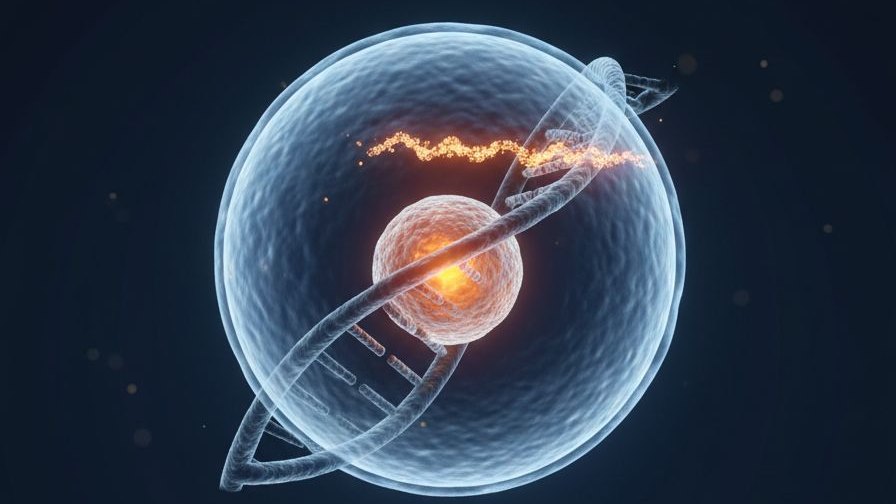
Every cell holds DNA, the body's instruction book. Small chemical tags sit on top of it, and their pattern shifts as people age. Tests sometimes called epigenetic clocks read that pattern from a blood sample [1][3].
This study used three of them. Two, called GrimAge and PhenoAge, estimate whether a body seems older or younger than its years. The third, DunedinPACE, works more like a speedometer than a clock: it guesses how fast a body is aging right now [1][3]. In earlier work in adults, a faster DunedinPACE has gone with more illness and earlier death [3]. None of the three is a health check on its own.
What did the diet scores show?
The ten scores came from well known eating plans and indexes. Eight measure healthy eating, such as the Mediterranean diet, the MIND diet and a planet friendly diet. Two measure less healthy eating, such as a score for foods that tend to inflame the body [1].
One finding surprised the team. The plans overlapped far less than expected. The authors wrote:
Here, we show minimal overlap of participants classified in the highest quartile (top 25%) of adherence across different diet quality scores.
Tavares and colleagues, Nature Communications, 2026 [1]
In plain words, the people who scored best on one diet plan were mostly not the same people who scored best on another. Healthy eating can look quite different from person to person [1].
On the speedometer test, DunedinPACE, all ten scores went with the expected change: healthier eating with slower aging, and less healthy eating with faster aging. On all three tests, only DASH and Nordic stayed clear after the team corrected for running many comparisons at once [1].
DASH is an eating plan rich in fruits, vegetables and low fat dairy foods, first built to lower blood pressure. In a well known 1997 trial of 459 adults, it lowered blood pressure over eight weeks [2]. The Nordic diet score rates how closely meals match a northern European way of eating [1].
The links were small. For the strongest one, DASH, a clearly better diet score went with about a tenth of the normal spread between people on DunedinPACE. Links on the other two tests were smaller still [1].
The team then checked their results in a second group, 1,034 adults from Potsdam in eastern Germany. The links pointed the same way and were about the same size. That group's diet records were from the 1990s, though, so eating habits may have been different [1].
What are the limits?
The authors list them openly. Diets came from a food questionnaire, where people report what they usually eat, and that is easy to get wrong. Almost everyone was German and of European ancestry. The team adjusted for things like sex, smoking, alcohol and total calories. Even so, other differences between healthy eaters and others could explain part of the link [1].
The authors end on a careful note of their own:
Our findings suggest that general adherence to a healthy dietary pattern could promote health through similar epigenetic mechanisms, despite variations in dietary composition.
Tavares and colleagues, Nature Communications, 2026 [1]
In plain words, they think different healthy diets might work on the body in similar ways, even though the foods differ. The word "could" matters here: it is an idea for future tests, not a result [1].
This study does not show that any diet slows aging, since people were measured only once. Nor does it say much about eaters outside Germany. It does show a link in about 7,500 adults. Eating closer to healthy diet plans went with slightly slower aging on blood DNA tests, and DASH and Nordic held up best [1].
What it does not show
that eating this way slows aging. People were measured once and reported their own diets, most were of European ancestry, and other differences between people may explain part of the link [1].
Sources
- Associations between diet quality, epigenetic aging and epigenome in two population-based cohortsNature Communications, 2026
- A Clinical Trial of the Effects of Dietary Patterns on Blood PressureNew England Journal of Medicine, 1997
- DunedinPACE, a DNA methylation biomarker of the pace of agingeLife, 2022
How we wrote this: numbers are given just as the scientists reported them. See Our rules for writing and How we fix mistakes.